In 2021, I have co founded Soltype with Juan Pablo Briceno and Donald Frederick. At Soltype we make eBook NFTs and as CEO of the company my main goal is to facilitate Soltype's success as a startup.
As CEO & Co-founder at Soltype, I have been focusing on connecting and attracting talent to our team and advisory board, securing a pre-seed funding round, joining accelerator programs, designing a scalable digital product, getting exposure and pitching at events, attracting and selling our vision to reputable writers, delivery and support in the engineering process, user testing, community building, hiring, communications, and establishing brand awareness. It's been and still is an incredible learning process that keeps me at the forefront of innovation.
Interviewing writers, tech enthusiasts and validating a market opportunity.
Refining a problem statement and understand our user persona.
Designing our product, refining & building component libraries and useful style systems.
Attracting and managing a team, getting funding and promotional activities.
Finding out if NFTs for text have a market.
In early 2021 NFTs became the main topic of discussion. Every day, millionaires where being made through the trade of digital art. So we though to ourselves: "Why is this not happening for digital books?"
As the NFT market generated around $24.7 billion worth of organic trading volume, it was inevitable to give attention to this market. As 1000s of blockchain powered startups where being backed by VCs it seemed logical to think that this technology would bring fundamental change to the way we approach digital ownership. Although I still believe that, I now see that the timing and speed at which this will happen will not be as quick as we believed at the beginning of this venture. As NFT hype grew, scams augmented, a global recession hit, scandals in the crypto world took place we have witnessed the plummeting of an industry. And although we work with the likes of MARVEL writers, have the backing of impressive advisors, and got often mentioned as a leading web3 publishing platform, it is hard to keep the dream alive. We keep building - but less rushed.
Now, flashback to before the market crashed and when optimism was all we had:
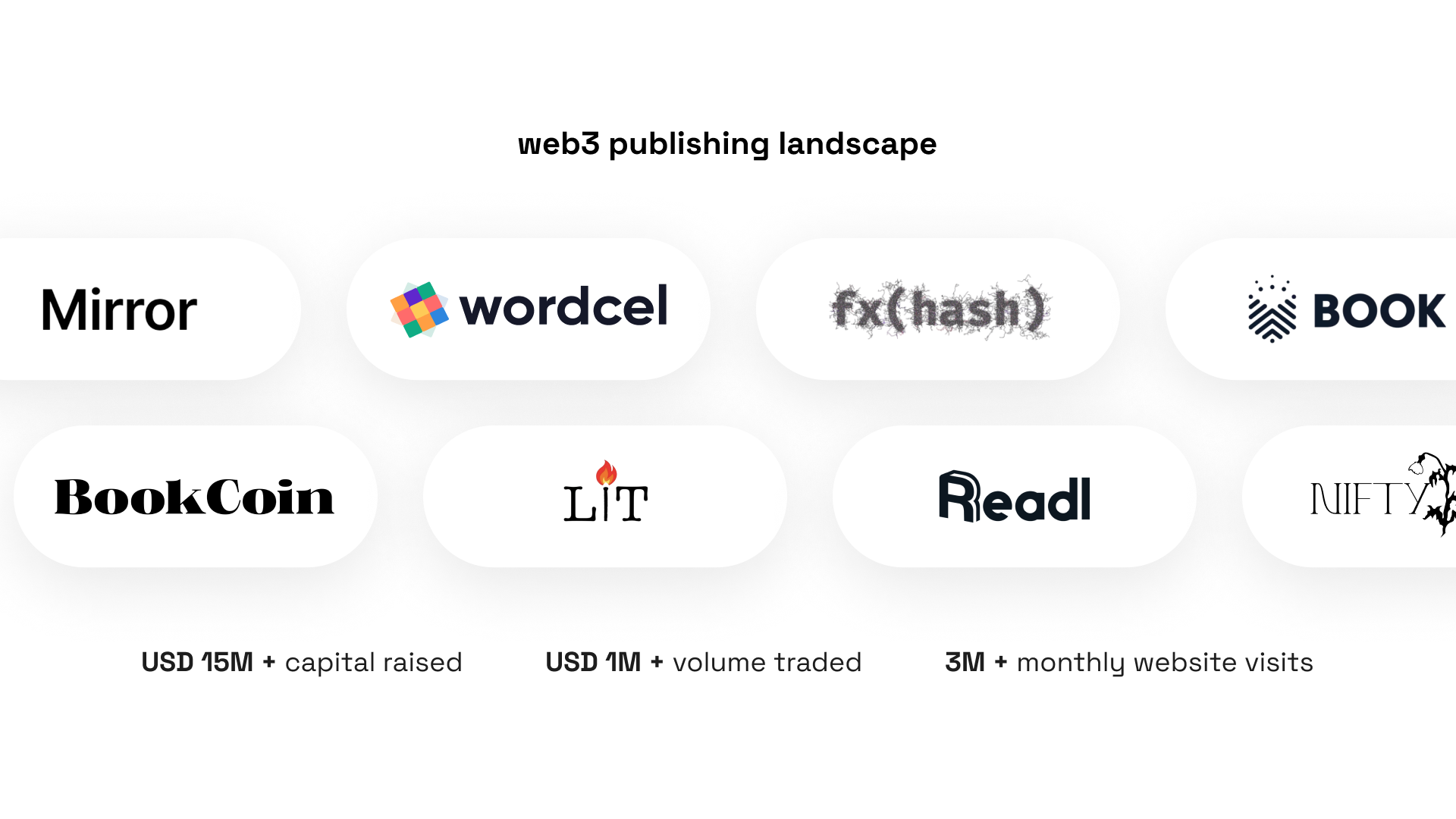
As you might have noticed, our first efforts have been driven by a technological innovation, rather than a problem. As this new technology was getting adopted we saw immense potential in applying it to a market as big as the book publishing market ($143 billion annually). So we found that a few companies where working on this which further validated our assumption that we had found something interesting.
We decided to build a community on Discord in order to gather our users into one place where they could provide us the insights we were looking for in order to build a product that they would love and also pay for. Join our Discord community
The magic of Discord is that it facilitates building community. So we managed to create a place where you could chat, call and talk about your writing passion. The most active members of the community became our power users and supporters. We did many interviews with them, surveys and prototype testing sessions to see if we were onto something with the product we wanted to build.
You might have read this before, and it's true. You might be building the right product for your users, but if they will not convert into customers, then you are not building a business.
We postponed this concern (mistake) and we decided to begin building with an experiment. So we created project LUDO (from latin, Playing), as a collaborative book where every page is a different digital collectible. Owning a page, gives you the rights to edit it. In this way you could contribute to writing a story that is forever marking the blockchain.
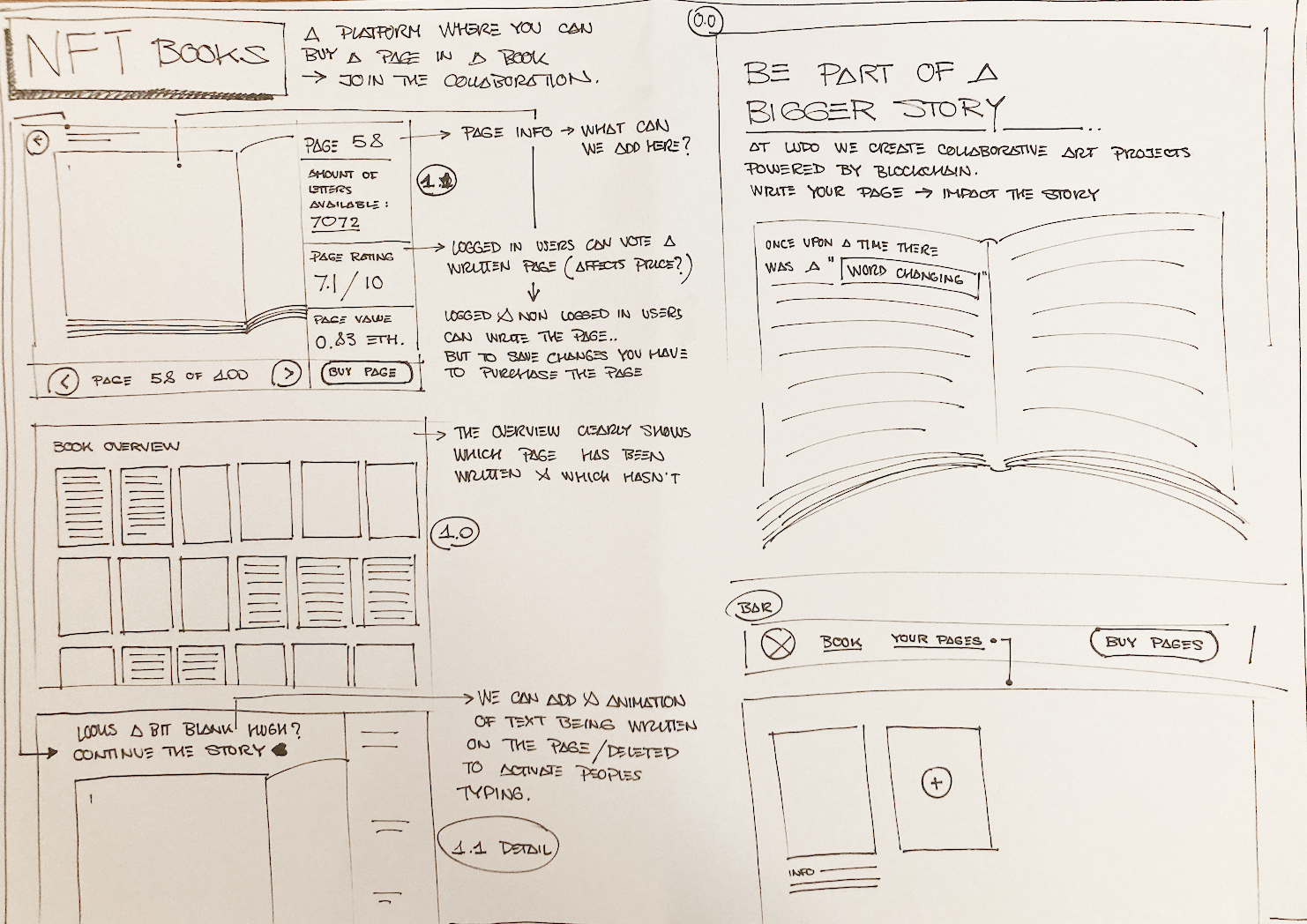
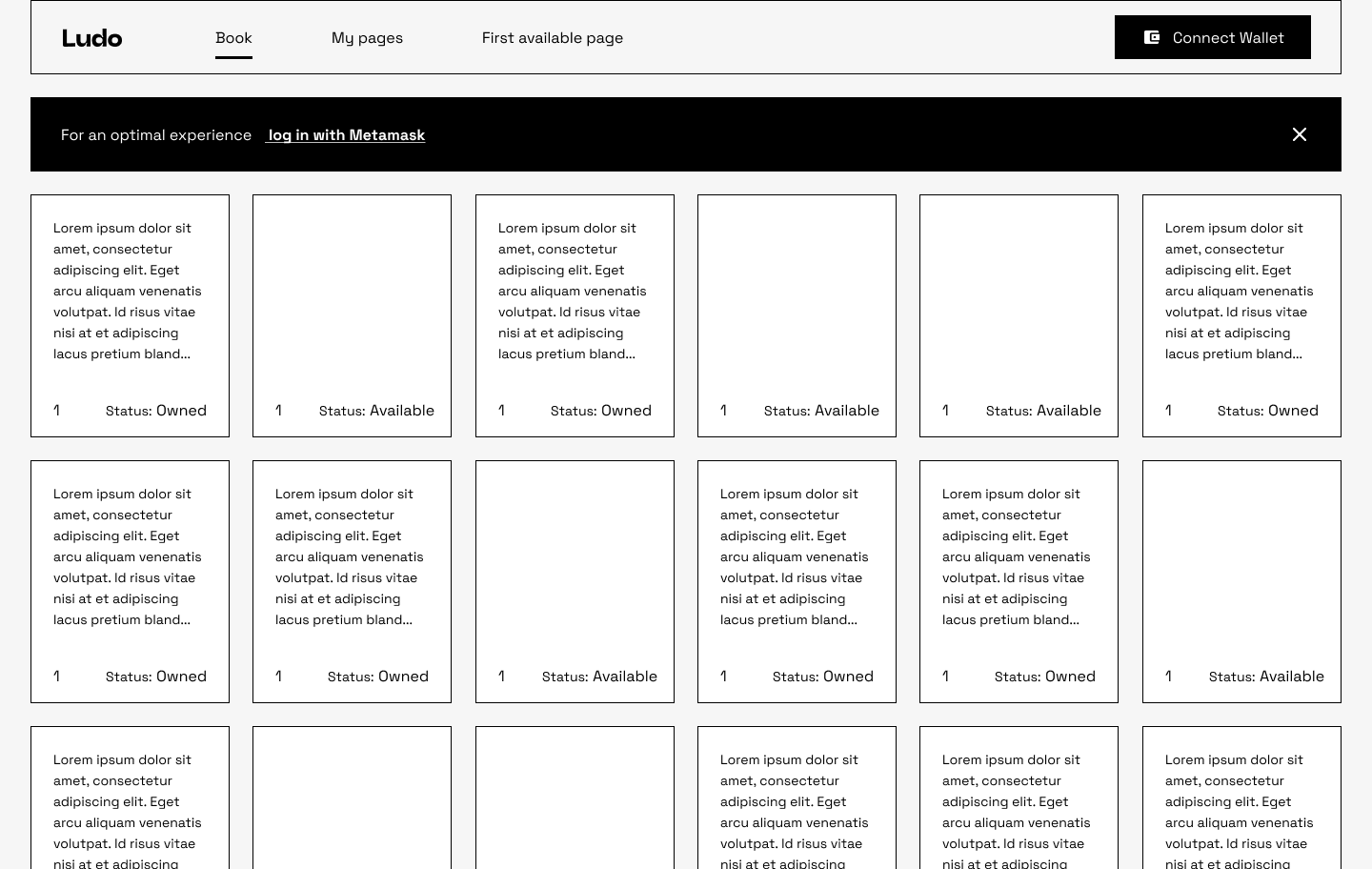
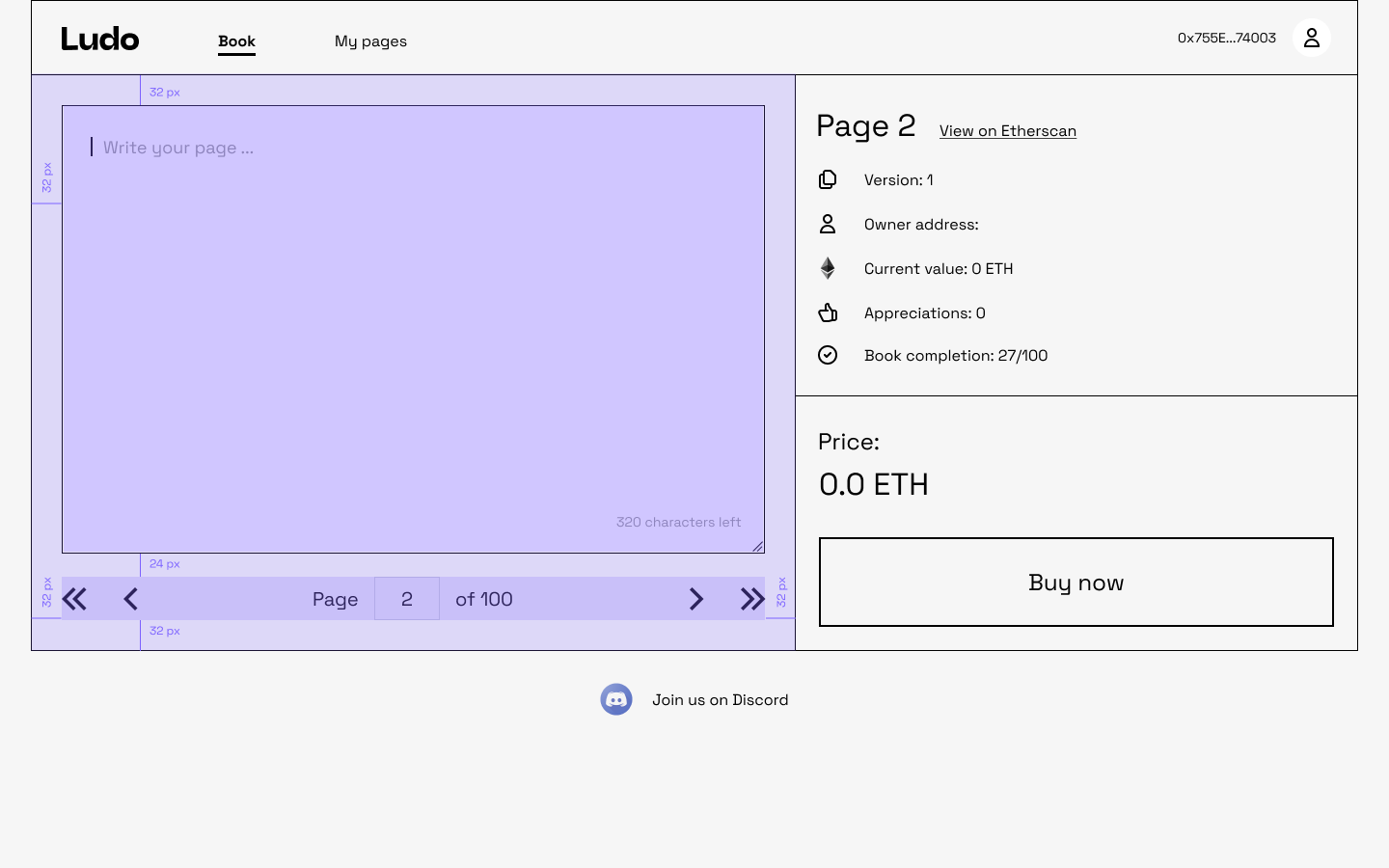
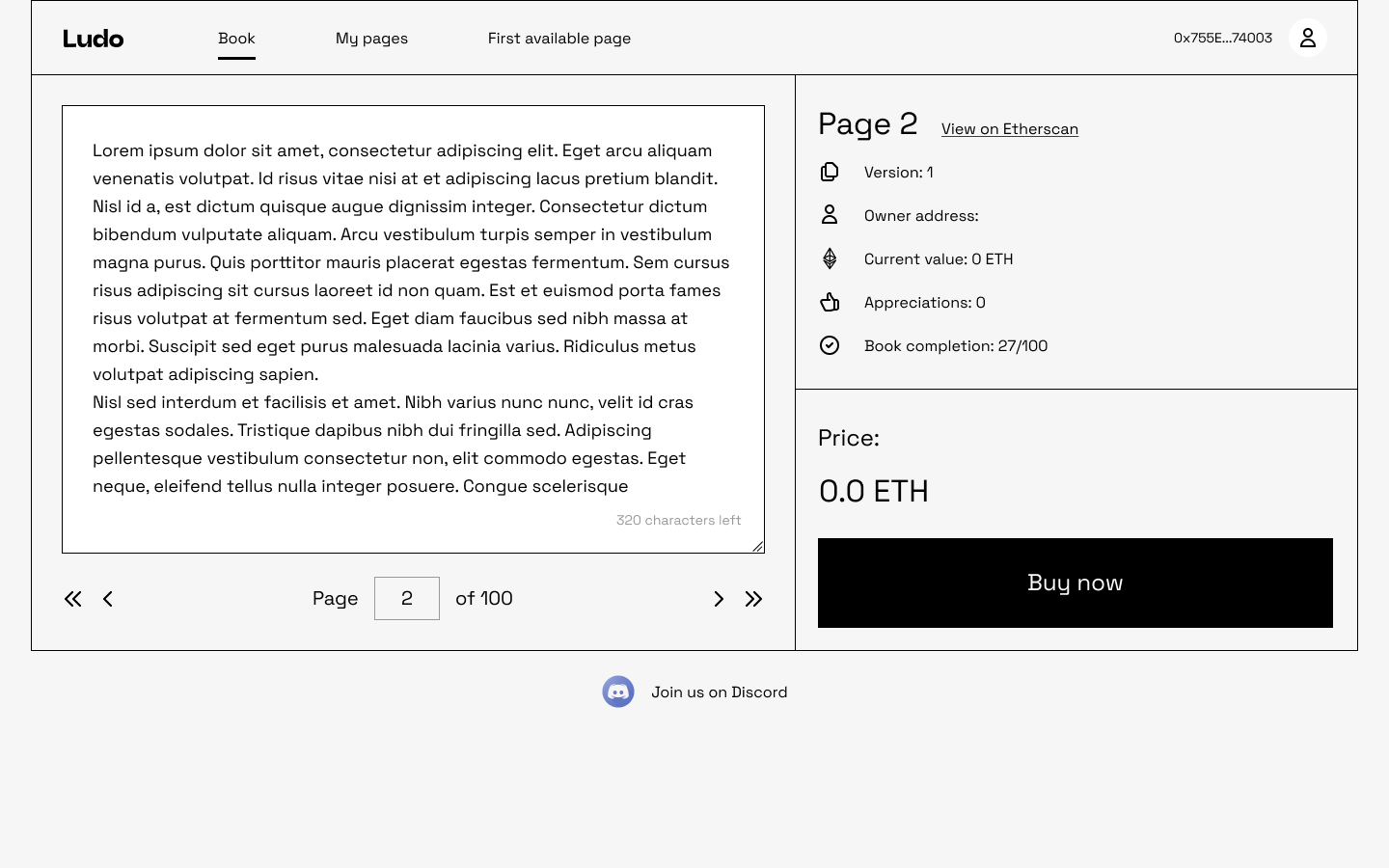
Designing our product, refining & building component libraries and useful style systems.
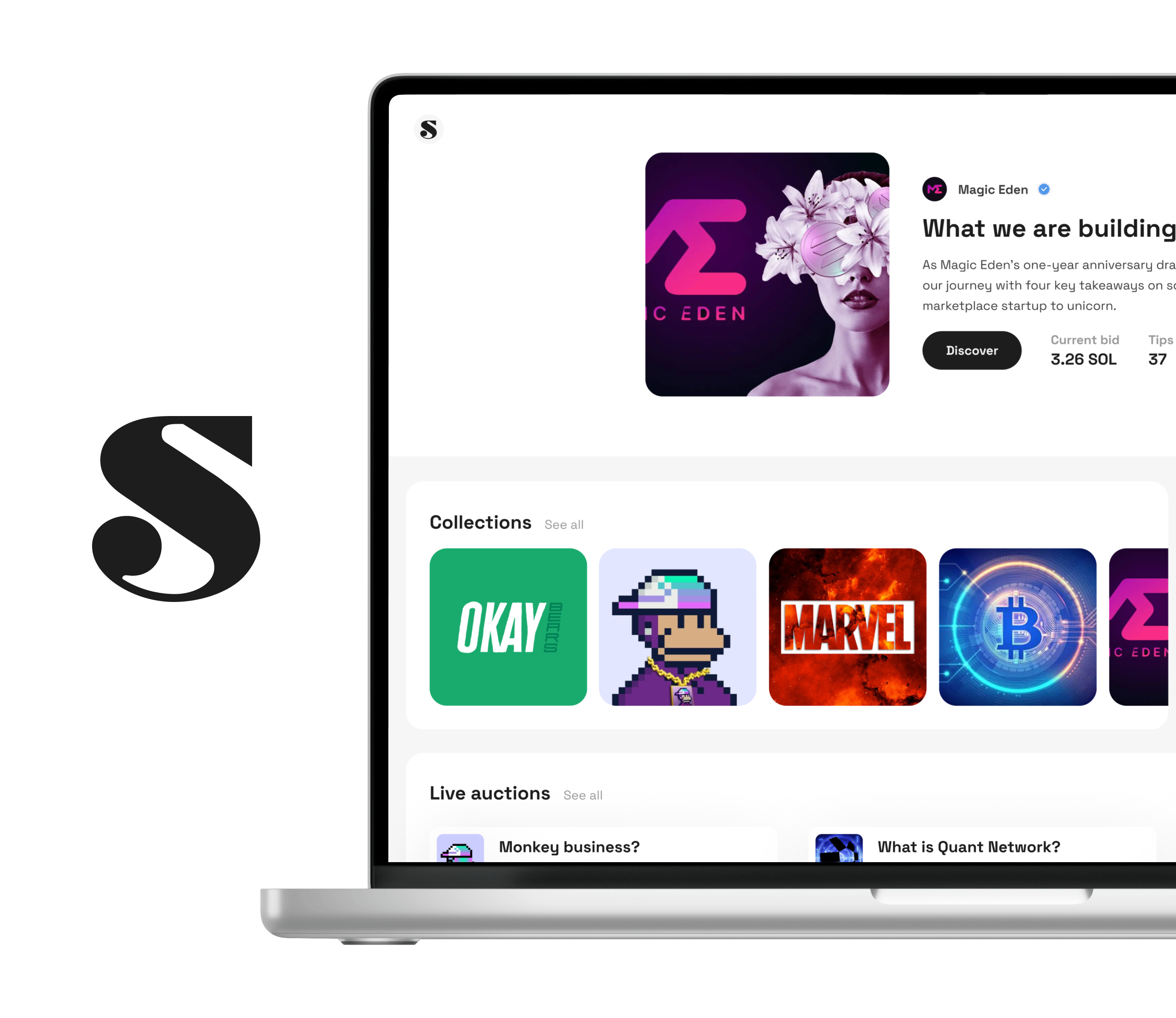
Through these early prototype we gathered feedback of great value. We learnt that our community was not after buying pages of a collaborative book. In fact, they struggled to see the value in this, What they where after was earning a a living with their passion by creating Literary NFT collections. So with these new findings, I went back to the drawing board & created these first visuals of a Literary NFT eBook marketplace.
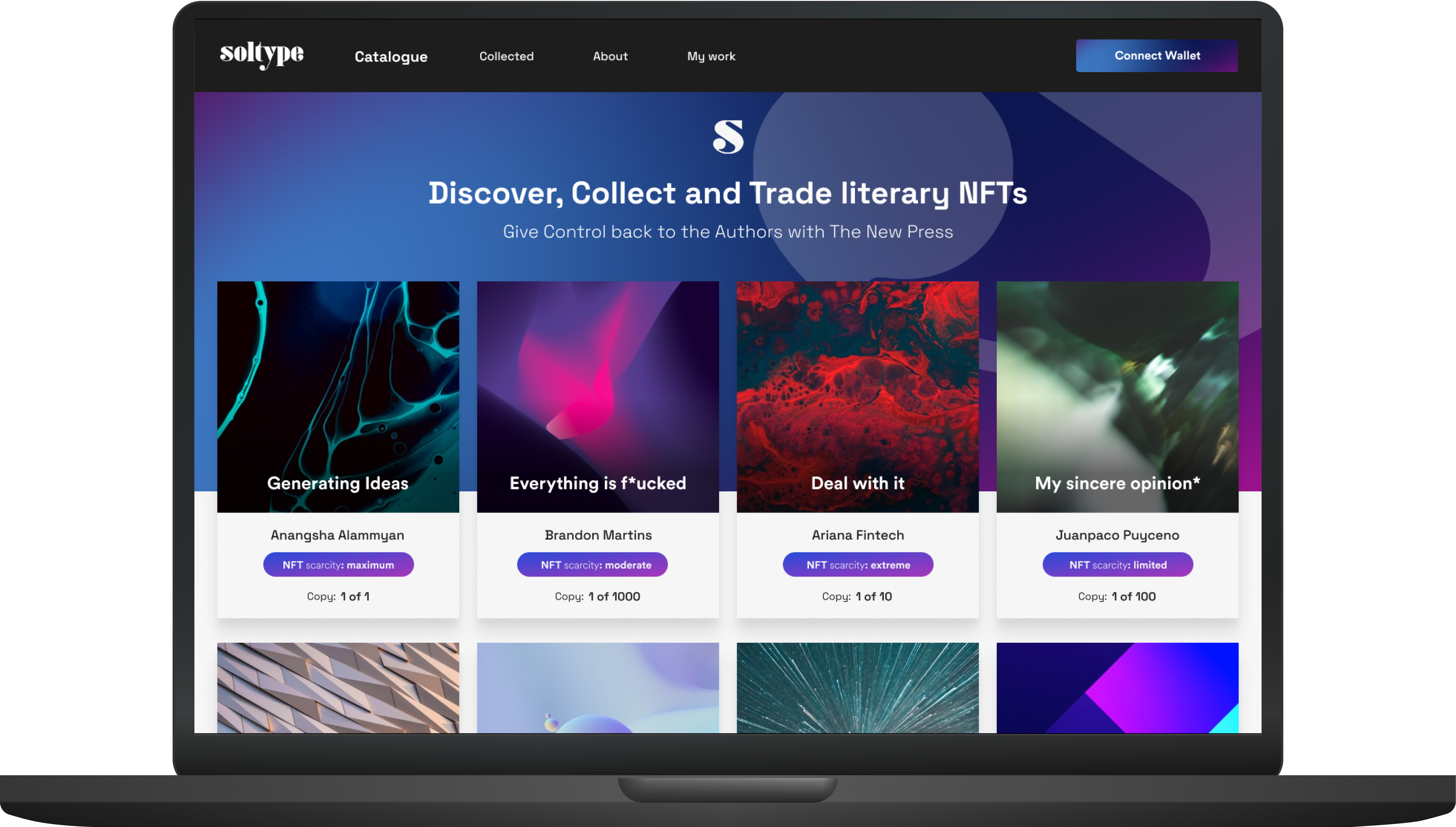
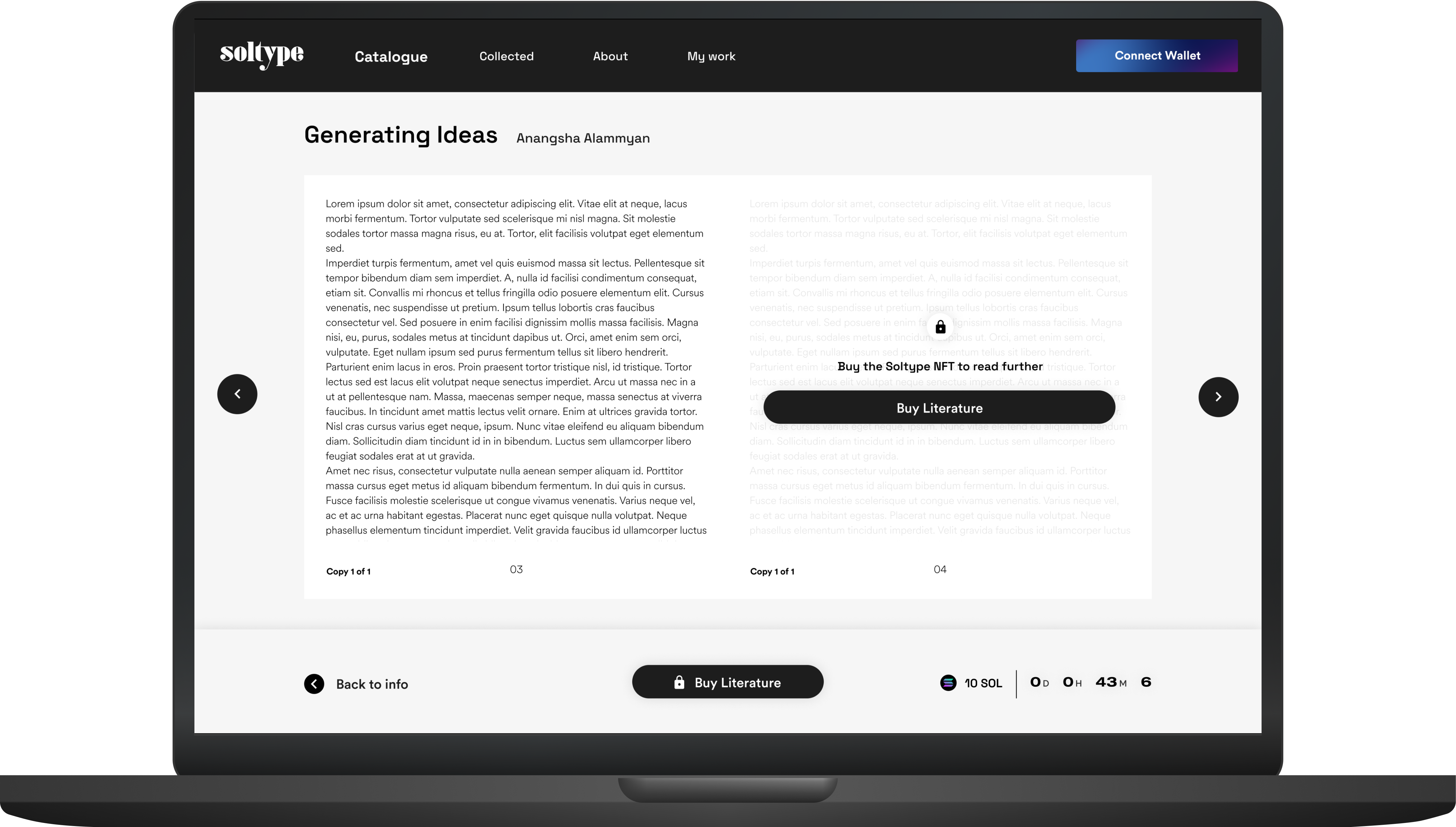
Our community loved it. So we sat down and looked for ways to start building this. And since Blockchain technology is not the simplest technology it took us a bit of thinking to understand how to make this work. A great starting point was to leverage Metaplex, a framework that helps to build on the Solana blockchain.
Soon after, we had our first MVP, that looked nothing like the designs, but more like a puzzled together piece of tech that made little sense. No matter that, and it's serious limitations, our MVP allowed us to create the first Literary NFTs.
Fast forward a few months, 100's of bugs, infinite testing sessions, user feedback insights gathering and we managed to create a decent product we where not ashamed of anymore. We did that, while keeping the community active, building a SOME presence and attracting talent to the team. Not to mention the fact that with our early traction we started to consider fund raising.
Crypto, NFTs and blockchain overall are not very intuitive. In fact building a product that aimed to reduce friction for the non NFT experts has been at the core of our focus from very early on. That said, it was hard remove certain key friction points from our product's UX. For instance owning a web3 wallet is a must in order to be able to buy an NFT. And many users deeply struggled with that. Because of that we partnered up with a company that aimed to remove the necessity of wallets to interact with blockchain content: Crossmint
Just like with Crossmint we made many friends and partners that all started to appreciate what we were doing. Together we helped each other to build faster and better products.
Attracting and managing a team, getting funding and promotional activities.
After having 1000+ Soltypes published, we felt that we reached a stage that justified us to raise funding. So we kicked off that process and went fundraising. Despite all the headlines in the news talked about the beginning of a recessions and all that crypto was doing was stealing, we persisted and successfully raised a pre-seed funding round of USD 100K. Just enough to allow the core team to keep working and hopefully attract some talent for a few months to come.
Here you can see a few slides to one of the pitch decks we used.
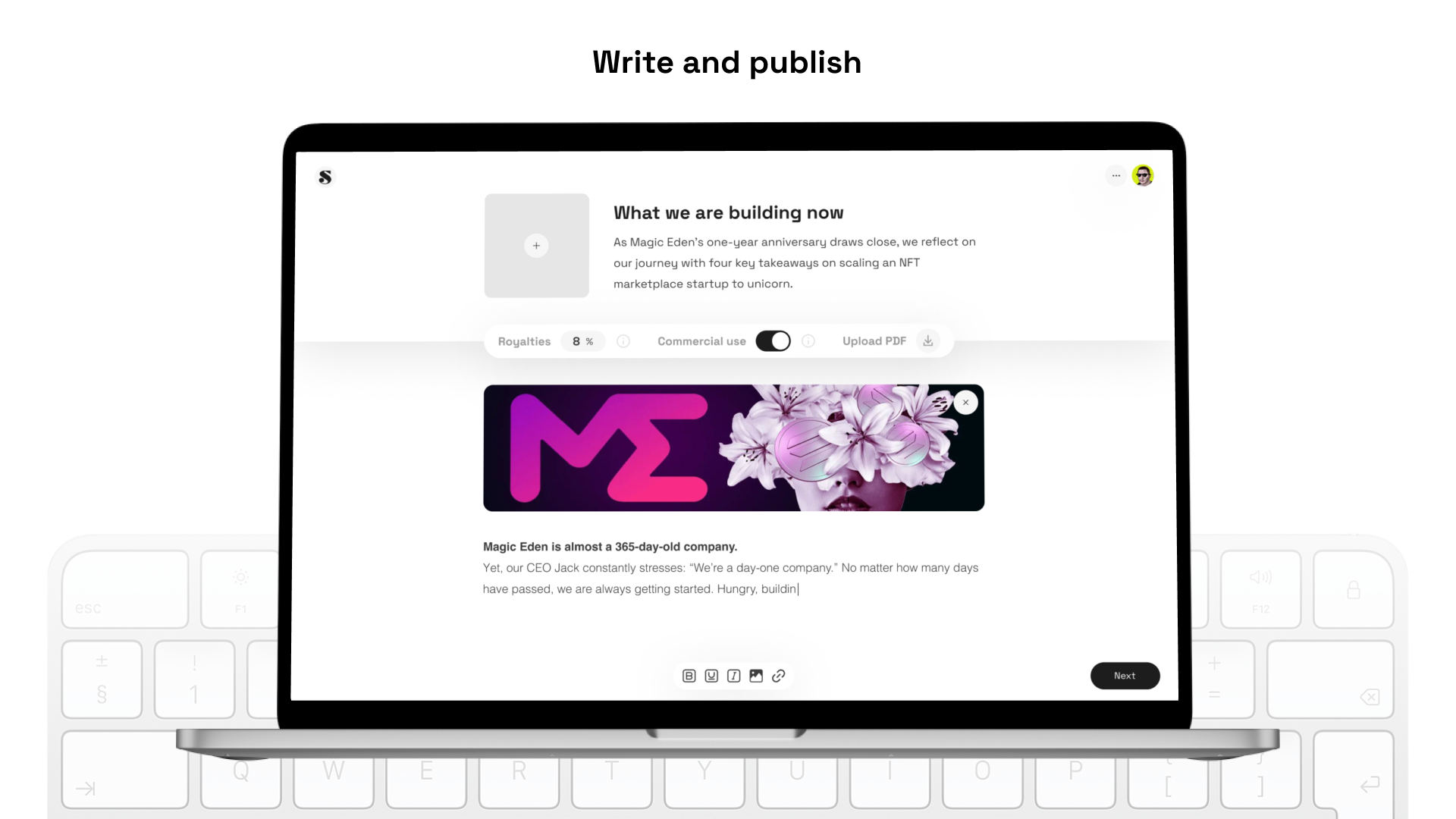
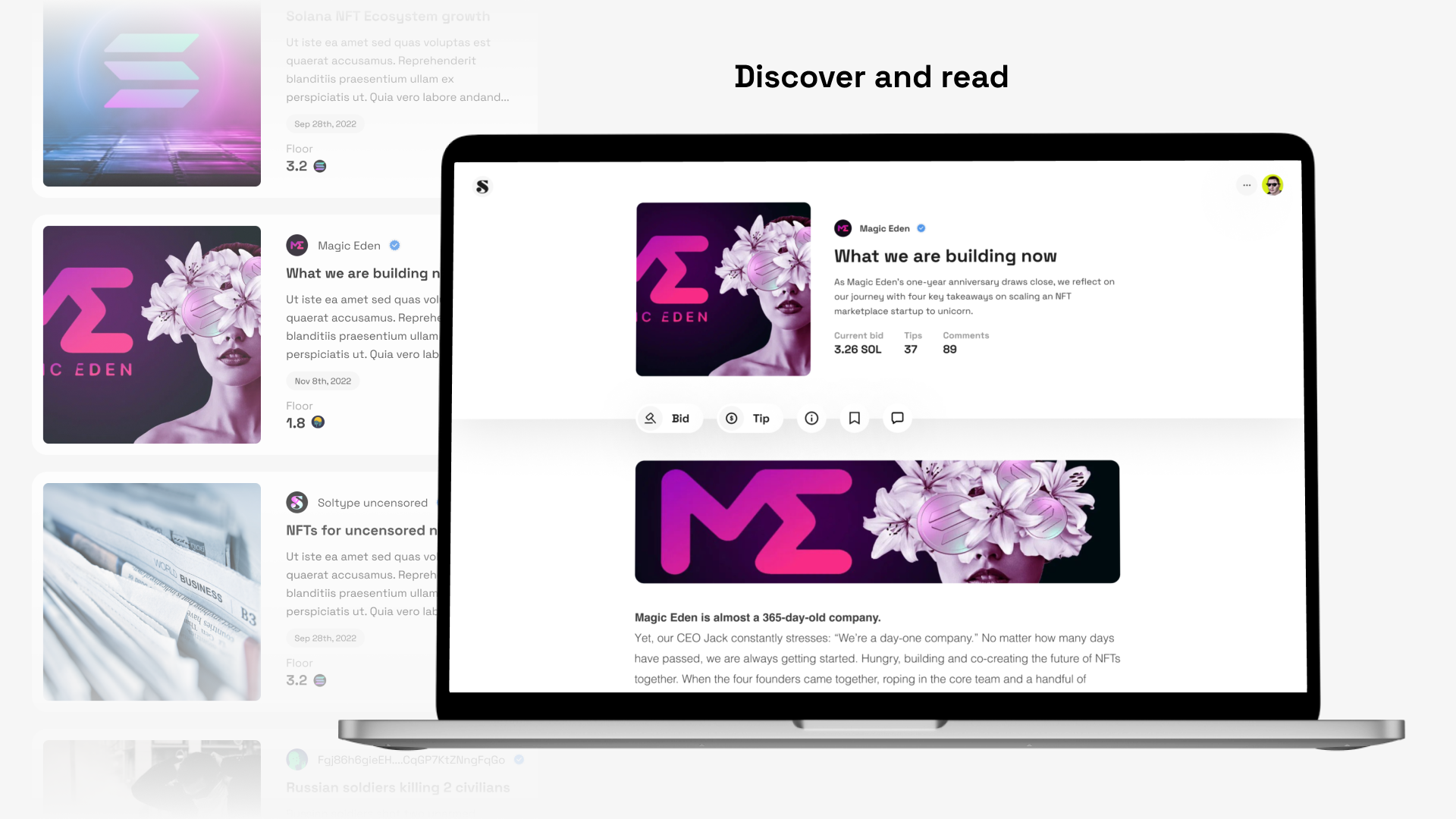
Now that we proved we were onto something we decided to push on our design language. I created a stronger brand identity and refined our product designs. I created a component library, styles and pixel perfect designs ready for implementation.
This is one of the designs:

With prospect of growing and scaling we built a comprehensive component library with nested components, variants and a practical style guide.
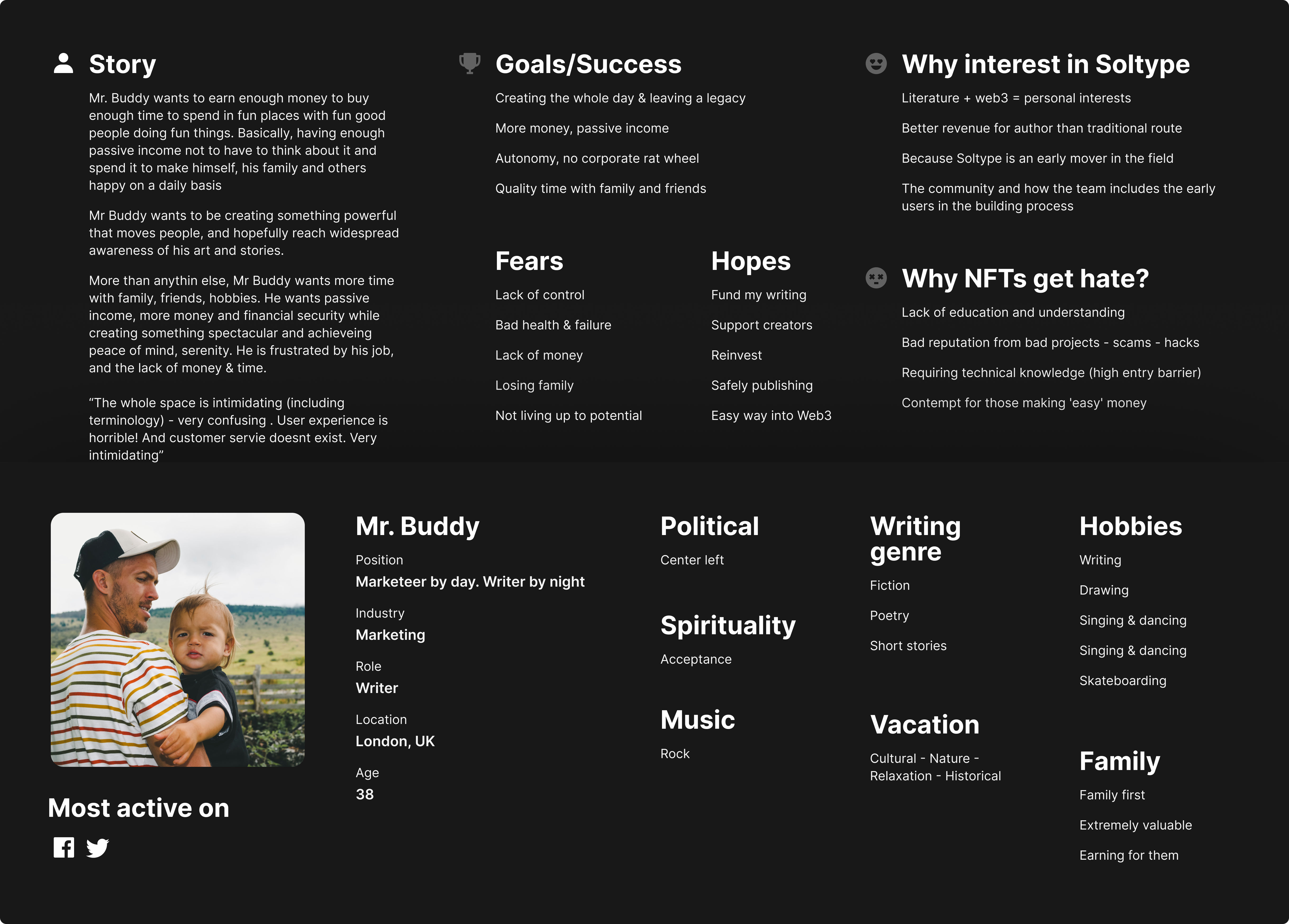
Refining a problem statement and understand our user persona.
Despite having on our side leading Crypto news publishing platforms like The Cryptonomist, Censored publishing platforms like Meduza, bestsellers and award winning writers like Scott Pratt & Joseph Nassise and even MARVEL writers like B.Earl, we did not see any significant volume in trades to signal that we would eventually start earning on taking a cut from every sale made on our platform. So the business model we had planned for was not going to work unless we changed something.
After a few months of inertia, while we kept obtaining good promotion and a good reputation, we understood that we had to be more concrete with our business model. So we went back to the drawing board and remembered how the whole journey started. We believed that reputable digital book collections could trade for high value. Imagine if the early versions of Harry Potter would have been digital collectibles that only the owners could have access to? How much would it be worth today to have access to an original, unedited first copy of Happy Potter freshly written by J.K Rowling?
Although we had no J.K Rowling on our side, we had a MARVEL writer, B.Earl. And we believe that by allowing collectors to buy an early collectible from this upcoming award winning writer they will eventually profit from it as a very valuable investment.
Now that we had a concrete go to market strategy to generate actual sales volume, we also decided that it was time to give our product a more concrete problem/solution statement that would resonate with the vaster market.
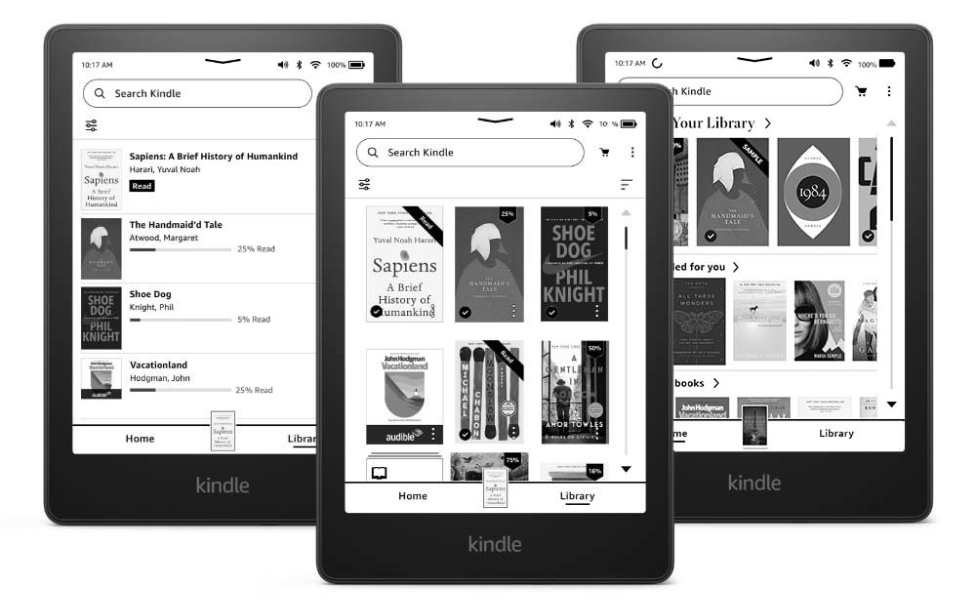
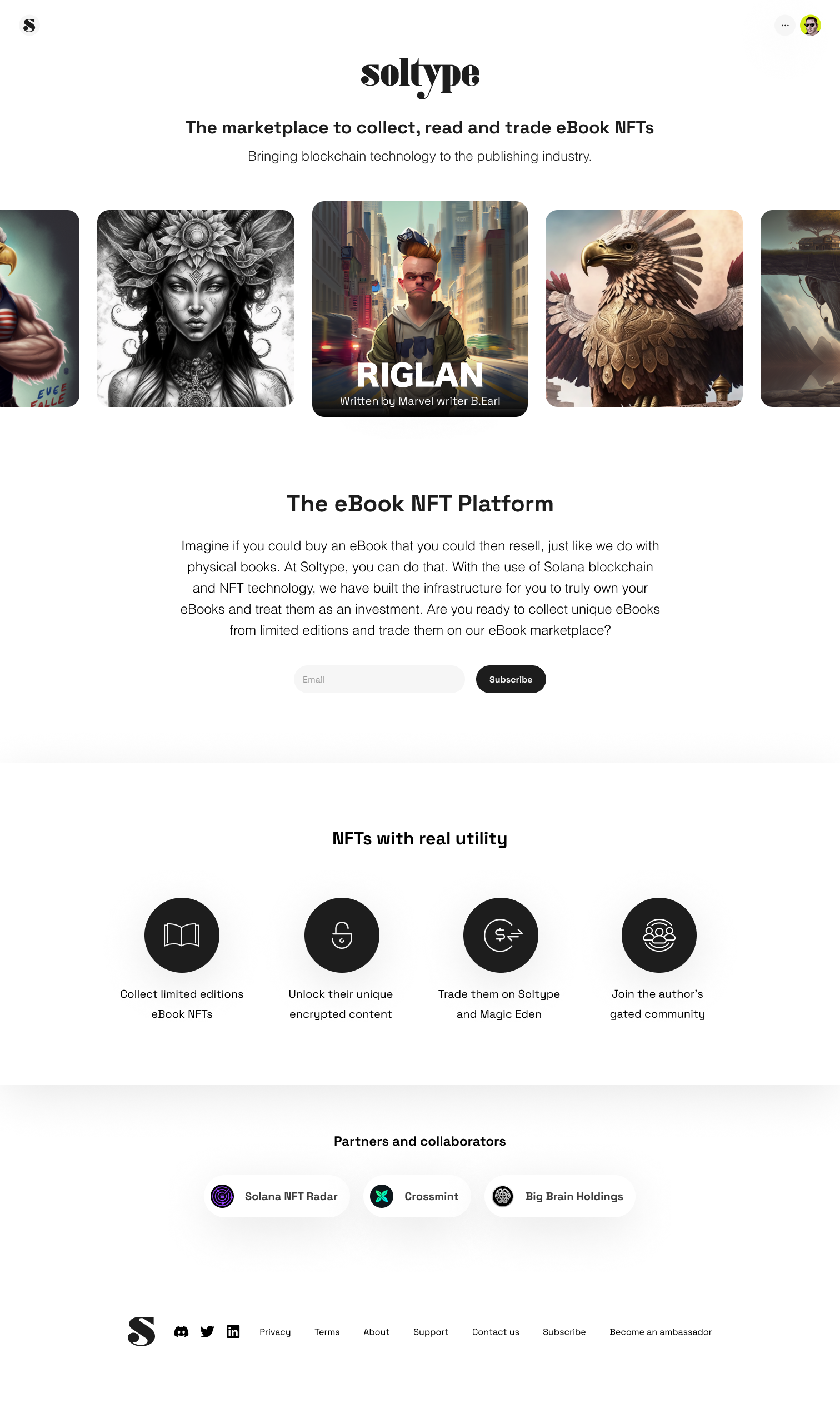
Currently, when you purchase an eBook, you only own a license to view it, not the eBook itself. This means that you cannot resell it. So you end up with a lifetime of eBooks in your digital library that hold no retail value.
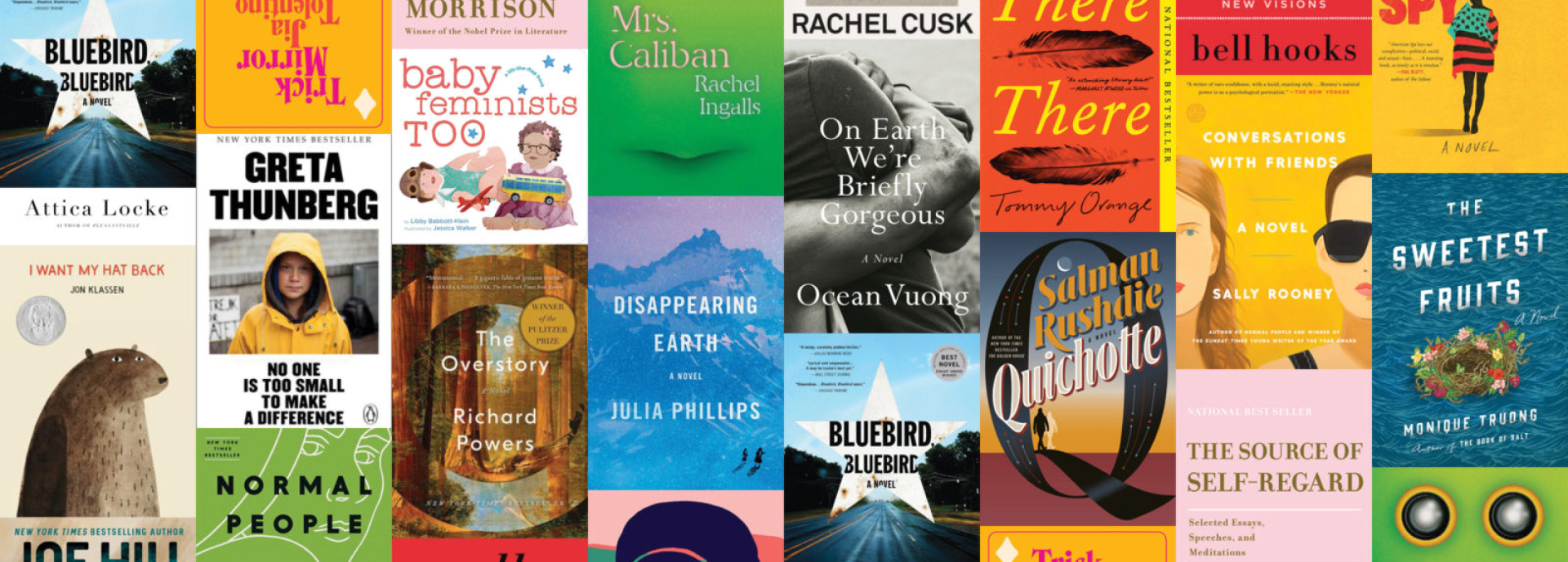
Soltype allows users to own and resell digital books as they would with physical books, giving them greater control over their digital content.
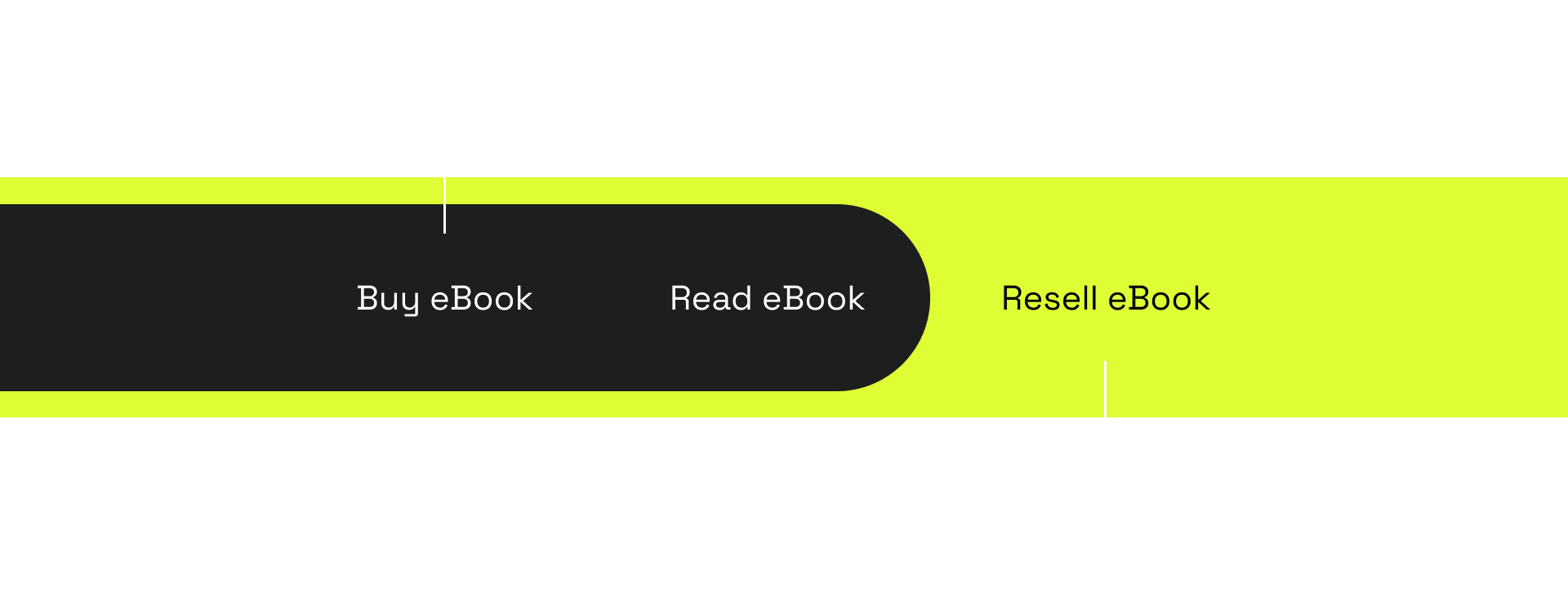
Despite the elaborate component library, a business runs on actual sales. So we had to disregard my efforts and proceed with reshaping the product so it could be focused on selling only extremely curated content that had a potential market. And so Soltype was reborn:

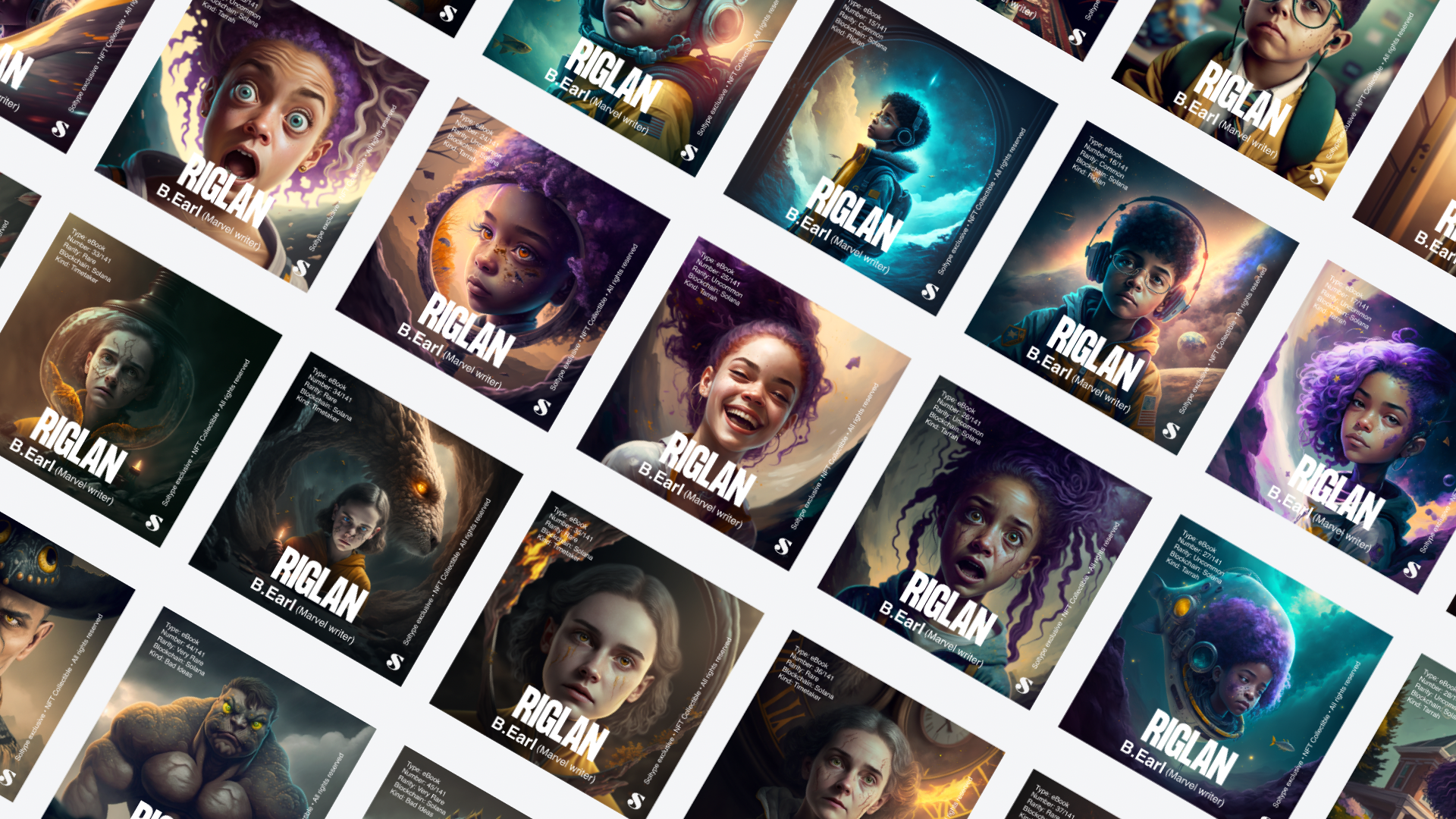
We learnt that to sell, fame and marketing were necessary. Especially now that he hype left the space, only what truly has intrinsic value and long term value perceived will actually sell. So we created the RIGLAN collection for B.Earl, Marvel writer. By harnessing the power of generative AI art we created a compelling collection of covers for a 1001 collection of eBook NFTs that only the owners of these NFTs would be able to read. We rebuilt our tech in the aspects that we could not reuse from our first version and kept going.
Startups are brutal environments. Or you have product market fit, or you don't. And if you don't you just die. It's very simple. This is why time is the most valuable asset you can have in entrepreneurship. Because you might one pivot away from finding product market fit. And although user interviews and market research can show you the direction, they will not tell you what the smartest business decisions are. This is why we learnt to also pivot fast in terms of product and build designs that are focused at quick execution and simplicity, rather than elaborate over complexed designs that might become useless before being even done programming them.
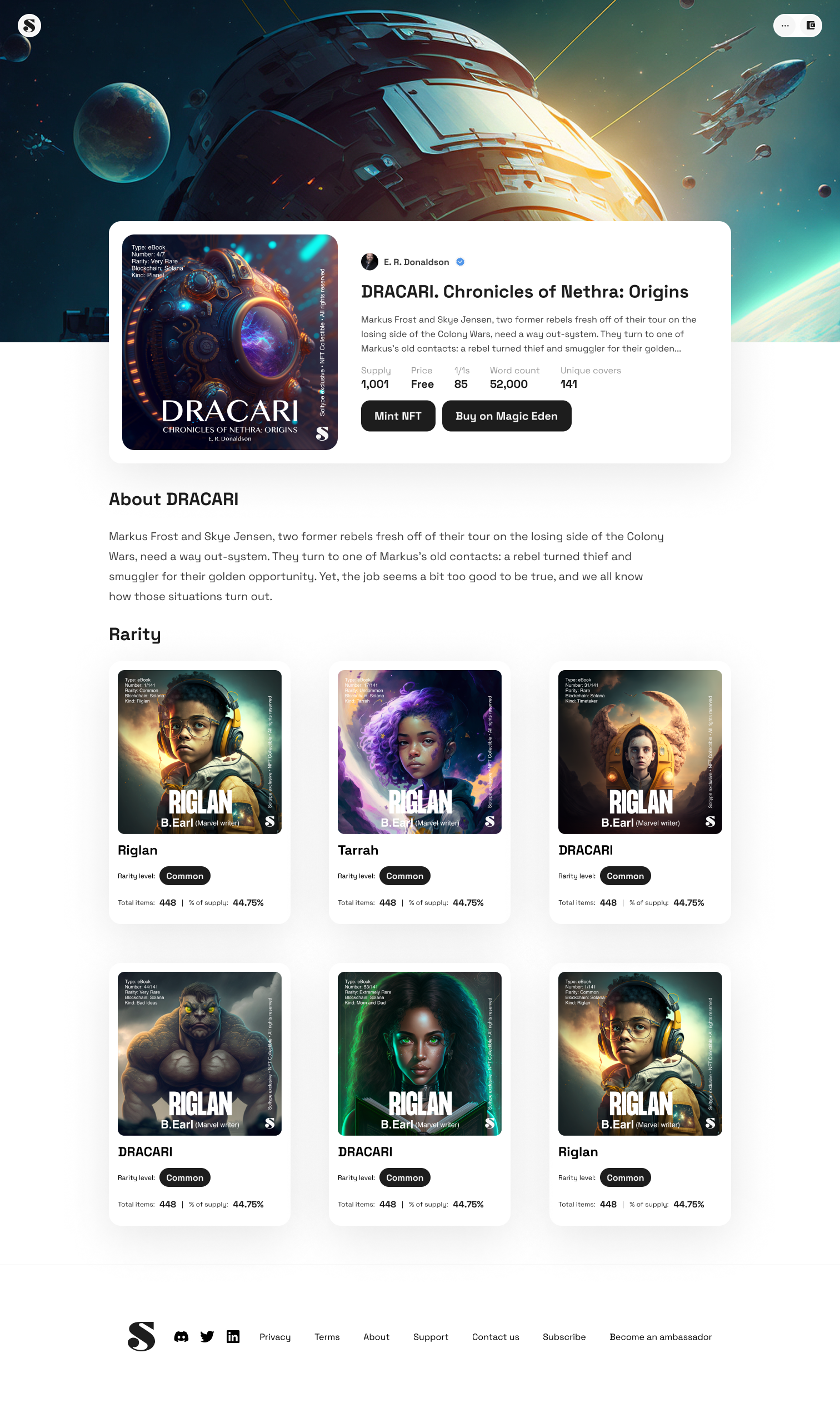
We sold for more than USD 10K in copies of RIGLAN (written by Marvel writer, B.Earl). Although this is not the classic representation of Startup success, it gave me a very complete experience that not only makes me a better designer, but also a happier person. I now know what the classic startup mistakes are in a very tangible way. I know that sometimes research and insights can be very misleading and that to build a successful business lot's of smart work needs to be executed. Traction and sales first, product after.